

Complete Guide to Metal Deburring: Processes, Machines & Applications
Dec 4 ,2025
Deburring is crucial in the metalworking process, ensuring safe and usable part generation. Many metal machining processes, such as milling, grinding, drilling and stamping, leave sharp, raised edges, ridges and protrusions known as burs behind. Metal deburring machines are designed to remove these imperfections from machined metal products to create a smooth, high-quality finish.
Working with metal demands the highest precision. At ADV China, we help our customers meet their quality and productivity goals by automating their deburring processes. Our machines ensure efficient deburring, edge rounding up to a radius of 2 mm, oxide layer removal, effective slag removal, and precise surface grinding. We also offer tailored solutions for small part processing. Industries such as laser job shops, stainless steel processors, steel service centers, and automotive suppliers benefit from our comprehensive, integrated systems focused on metal finishing, all specifically designed for the worldwide market.
Classified by function:
1,Double sided deburring of small parts -Deburring and uniform edge rounding on allsides of parts, both on outer- and innercontours, in a single pass
2,Deburring and edge rounding of steel andstainless steel on both sides in one single pass
3,Deburring machine for grinding, deburring andedge rounding of punched, laser and high definition plasma cut parts in one single pass
4,Deburring machine for grinding, deburring andedge rounding of punched, laser and high definition plasma cut parts in one single pass
5,Deburring and edge rounding of laser, plasmaand oxy fuel cut parts on both sides in onesingle pass
6,Dry grinding machine for deburring, consistentedge rounding and surface finishing
7,Economical removal of slag, deburring and edgerounding on plasma- and oxy-fuel cut parts
8,Grinding machine in wet execution for the perfect surface finish
What is a burr?
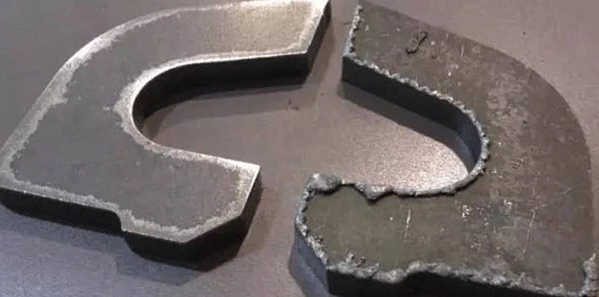
In sheet metalworking, a burr is a small, raised edge or rough ridge left on the metal after cutting, punching, or machining. It’s usually an unwanted byproduct caused by material deformation or tearing during the cutting process. Burrs can affect part quality, safety, paint adhesion, and assembly, making burr removal a critical step carried out using deburring machines as part of the overall metalworking operation.
Applications
Thin Sheet Metal Processing
In modern metalworking, thin-gauge sheet metal parts are often laser-cut or punched, leaving residual raised edges and other external imperfections. These require deburring and edge rounding before moving on to further production stages. ADV China deburring machines are designed to meet specific needs based on part geometry, quantity, material type, and technical requirements – ensuring optimal and repeatable results in every production step. Due to the thin nature of the material, sheet metal is more easily deformed during the punching operation. Uneven parts are harder to deburr, and may require leveling or need upward and downward fixing during deburring, e.g., with double-sided treatment on the ADV 508 series. Our machines ensure efficient removal of metal flash, even on complex geometries, ensuring smooth edges and improved product quality.
Example of a deburring machine in use on thin sheet metal: Clearly visible are the untreated edges with burrs in their original state, as well as the clean, smoothed edges after processing.

Thick Sheet (Plate) Metal Processing
When working with plate or thick metal parts, especially plasma-cut parts in demanding metalworking operations, stubborn burrs and slag can form. These can be difficult and time-consuming to remove manually.
Plate metal parts are inherently heavier than thin sheet parts—something to consider when selecting a machine. One-sided machines such as the 508 and many other common deburring machines require two passes, meaning the part needs to be turned. However, these solutions achieve higher degrees of edge rounding (up to a radius of 2 mm) in a single pass. Double-sided machines eliminate the need to turn parts, as they process the material on both the top and bottom simultaneously.
Example of a deburring machine in use on thick sheet metal: Clearly visible are the untreated edges with burrs in their original state, as well as the clean, smoothed edges after processing.
The deburring process
Deburring unit
The deburring process is performed using abrasive belts or abrasive brushes. Common abrasive materials used on grinding belts include corundum, silicon carbide, and ceramic. The grit size may vary from P 36 to P 180, with the higher number representing smaller grit size, which results in finer material removal with lower aggressiveness. The selection of the grinding belt and material is determined by the required surface quality, aggressiveness, removal-to-time ratio, tool stand time, and the material to be ground.
Rate of removal
On a ADV machine, the rate of material removal is determined by three factors: grinding tool material/grit, feed rate, and depth of cut (infeed). Properly balancing these factors will yield the ideal deburring result without scarring the part’s surface.
Wet vs. Dry Processing
Wet treatment is usually employed during surface finishing. ADV China machines offer both wet and dry methods, but unless a specific coating finish (such as non-directional finishes) is required, dry operation is usually sufficient.
Interior and exterior contours
Using an innovative combination of pressure rollers on the grinding belts as well as guiding the workpiece, abrasive pressure can be applied evenly to burrs on both inner and outer contours.
Double-sided vs. single-sided processing
ADV China’s unique double-sided dry machining enables the simultaneous treatment of both internal and external contours in a single pass. This significantly increases productivity and consistency, as no manual turning is required. Our 506 series (XS, M, L, XL) offers various working widths and unit configurations to suit different materials and production volumes. Choose double-sided machines if machine footprint is critical on tight shop floors, if turning parts in multiple passes needs to be eliminated, or if the workpiece dimensions and specifications fit the 506 range.
One-sided machines, like the 508RW series, still have their advantages. One-sided machines may achieve higher-spec surfaces, such as directional or non-directional finishes, and can provide higher degrees of edge rounding (up to a 2 mm radius). One-sided machines generally have lower acquisition costs than comparable double-sided models, though this is later offset by higher energy costs and reduced efficiency due to part handling. Both one- and double-sided solutions have their merits.
Single-sided vs. double-sided processing – Double-sided grinding increases efficiency by processing both sides at once.
Further Applications on Metal deburring machines
- Edge Rounding:
Sharp edges are rounded to improve handling safety and coating adhesion while reducing rust risk. Edge rounding up to 2 mm radius is possible on all sides. - Surface Grinding:
High-quality surface finishes may be required on select parts, for example on aluminum and stainless steel parts. The highest level of finishing can be achieved on wet grinding machines, e.g. from the SMW series. - Slag Removal:
Plasma and flame-cutting methods may produce unwanted, heavy slag. Our machines remove slag, ensuring clean parts and improved paint coating adhesion in later stages. - Oxide Layer Removal:
Laser-cutting, mainly with CO2 lasers, but also with newer fiber lasers, may result in oxid layers or splashes on cut parts. However, removing oxidation from edges is crucial for subsequent treatments like painting or coating. Our brush units ensure thorough oxide removal for improved adhesion and corrosion protection.
Upgrade Your Line With Automated Deburring Machines
You can remove burrs from your metal workpieces to ensure a safe, smooth and visually appealing surface finish with advanced deburring solutions from ADV. We understand every company has different needs and specifications, which is why we offer a complete line of automated deburring and metal finishing machines for budgets ranging from large to small. Whether you need a wet deburring system or a dry deburring system, our machines can meet your specific needs or regulations. When you invest in our state-of-the-art metalworking products, you can expect around-the-clock operation and versatile function for parts of any size, shape and coating. Due to their dependable performance and durability, our metal deburring machines and components boast long life spans, saving you money on equipment maintenance. Browse our cutting-edge line of deburring systems and get in touch with our team today for a quote!