


Üçgen Vuruşlu Bant Zımpara Makinesi: Metal Yüzey İşlemesi İçin Eksiksiz Kılavuz
Kas 25 ,2026
In commercial metalworking and woodworking shops, surface finishing is rarely a single operation. A part may need weld seams leveled, edges deburred, a grain direction established, and a final hairline or polish applied—often on the same large, flat or micro-arc surface. The triangular stroke belt sander has emerged as a purpose-built platform for this cluster of tasks because its belt path does more than carry abrasive: it changes what the operator can see, how heat leaves the cut, and how long the belt lasts under continuous load.
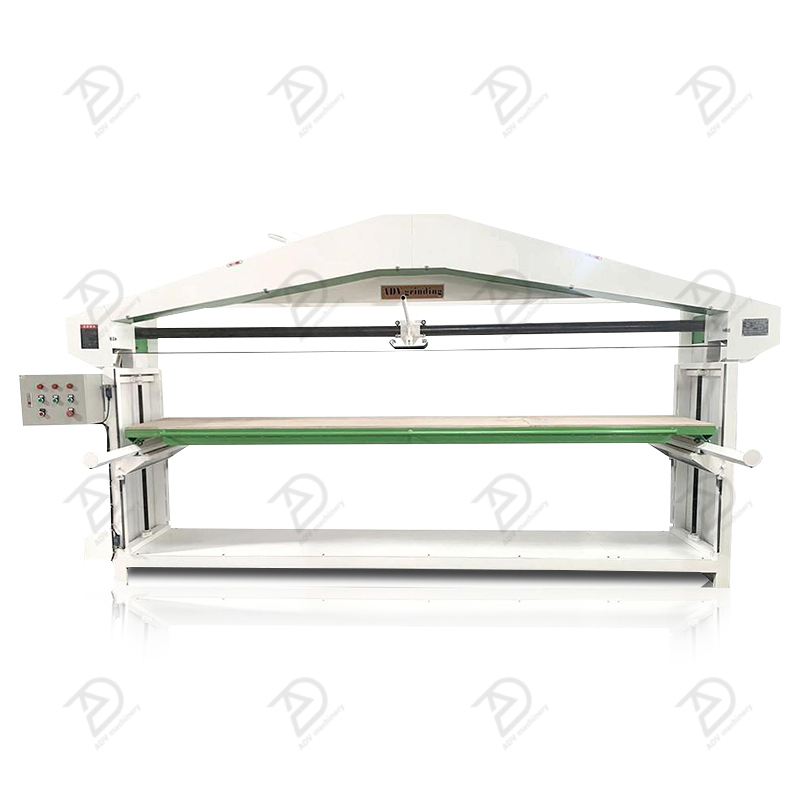
What Makes the Triangular Belt Path Different
A triangular stroke belt sander arranges a long, wide abrasive belt over a three-point roller geometry rather than a conventional two-pulley loop. The belt runs across a large triangular envelope above a rolling or motorized worktable. That geometry is not cosmetic. Manufacturers of industrial triangular stroke sanders specify three consequences directly tied to the triangle: better visibility on the part, better heat dissipation, and longer grinding belt lifetime.
The visibility advantage is practical. With a conventional stroke sander, the upper and lower runs of the belt can obstruct the sightline to the contact zone. The triangular layout opens the working area so the operator or camera can monitor the abrasive contact without leaning around the belt. In shops running visual inspection in parallel with sanding, this reduces the need for a separate inspection pass and the handling that goes with it.
Heat dissipation follows from the same geometry. A longer belt path exposes more abrasive surface to ambient air between contacts, and the triangular routing distributes flexing over a larger belt length. The result is lower belt temperature under sustained pressure—important when sanding stainless steel, aluminum, and other alloys where heat concentration can discolor the surface or shorten abrasive life. Belt saving is a stated design outcome of the triangular configuration, not an afterthought.
Where the Platform Fits: From Weld Seam to Micro-Arc Surface
The application envelope of an industrial triangular stroke belt sander is defined by the combination of a long stroke, adjustable pressure, and a table that can present the work to the belt at controlled speed. Industrial configurations are routinely specified for hairlining, graining, weld seam sanding, polishing, and achieving a uniform mill finish on metal sheets and fabricated components. The platform also handles deburring and edge breaking on laser-cut flat parts and prepares flat or micro-arc surfaces for subsequent coating, assembly, or cosmetic acceptance.
For large steel plate work, the stroke polisher variant scales the same principle to sheets measuring several feet in width and length. Automated steel plate stroke polishers can process sheets up to 72 inches wide by 144 inches long, with abrasive belt speeds ranging from 3,300 to 6,300 surface feet per minute and carriage stroke lengths matched to the plate dimension. The table carries the plate while the polishing head traverses; the operator sets the stroke and pressure recipe rather than physically guiding the abrasive across the full surface.
The Consistency Problem That Manual Stroke Sanding Cannot Solve
A manual stroke sander depends on the operator’s hand block pressure, stroke rhythm, and judgment. That works for one-off parts and irregular fabrications, but it introduces part-to-part variation when production volume rises. One operator cannot maintain identical pressure and movement over a large area across a full batch, which produces disparities in appearance and finish from one piece to the next.
Automated triangular stroke belt sanders address this by moving pressure, stroke length, and table feed into a controlled recipe. The carriage traverses the part along the length axis at a programmable rate, while the table advances across the width at a continuous speed. On a representative heavy-duty automatic triangular model, the polishing carriage runs up to 225 feet per minute along the length axis, and the motorized table travels at a continuous rate along the width axis with variable speed. The operator enters the stroke based on material length and the pressure appropriate to the abrasive and alloy; the machine repeats that cycle without drift.
Recent equipment designs push control further by adding floating force control and hard travel limiting to the triangular sanding head. The purpose is to prevent overcutting—the failure mode where excessive pressure or uncontrolled stroke depth removes more material than intended—while a protective dust suction mechanism captures debris and arrests sparks at the contact zone. For shops moving from manual stroke sanding to automated finishing, these controls are the difference between a machine that speeds up the same inconsistent process and one that actually stabilizes the finish.
What to Evaluate Before Specifying a Triangular Stroke Belt Sander
Work envelope first, not belt speed. The table dimensions and weight capacity constrain what the machine can actually process. Heavy-duty triangular stroke sanders are built around table widths around 30 inches with motorized vertical adjustment to accommodate part thickness, and weight capacities in the hundreds of pounds for standard models; larger plate-focused stroke polishers use fixed tables with capacities reaching several thousand pounds. Match the table to the largest and heaviest part in the foreseeable production mix before comparing motor horsepower.
Belt specification is a process decision. Abrasive belt width and length determine the contact footprint and the available abrasive inventory. A 6-inch-wide belt running at 4,750 to 6,300 surface feet per minute covers most hairlining and weld-blending work, but the belt must be matched to the abrasive type: coated abrasives for stock removal and grain definition, surface conditioning belts for blending and deburring without deep scratch patterns. Dual-belt configurations allow two grits to remain mounted simultaneously, reducing changeover time when a part requires a sequence rather than a single pass.
Tension and pressure control separate industrial machines from light-duty units. Pneumatic tensioning maintains consistent belt tracking and contact pressure as the belt heats and stretches; adjustable pad pressure allows the same machine to level a weld seam and then refine a hairline without changing the abrasive. On automated models, the pressure tool should be interchangeable or recipe-controlled so that the finish does not depend on an operator’s feel.
Dust and spark management are part of the finishing result. A triangular stroke sander generates fine metal dust and sparks at the contact point. Integrated dust hoods and suction ports at the belt end keep debris off the part and out of the working zone; on plate-scale polishers, dual dust outlet collectors and rail wipers prevent accumulation that would otherwise affect carriage motion and finish consistency. Treat extraction as a specification item, not an accessory.
The Takeaway
The triangular stroke belt sander is not simply a stroke sander with a differently routed belt. The triangular belt path is a functional design choice that improves sightlines to the contact zone, manages heat across a longer abrasive loop, and extends belt life under production pressure. When paired with programmable carriage and table motion, it converts surface finishing from an operator-dependent skill into a repeatable process recipe—covering the full chain from weld seam leveling and deburring to graining, hairlining, and steel plate polishing on flat and micro-arc surfaces. For metal fabrication shops evaluating a finishing platform, the specification question is not whether the triangular geometry matters, but whether the machine’s work envelope, pressure control, and automation level match the parts that actually need finishing.